6 Best Programmable Coffee Makers (October 2026)
The best programmable coffee makers include the Ninja Fresh Brew CE251 for varied morning routines, the Cuisinart DCC-3200 for shared breakfast tables, and the Hamilton Beach FrontFill Programmable for under-cabinet counters.
On this page (7 sections)
- How we chose these programmable coffee makers
- The best programmable coffee makers for different routines
- Which features matter when choosing the best programmable coffee maker?
- How to set up scheduled coffee for the morning
- How to get better coffee without changing the brewer
- What care does a programmable coffee maker need?
- Which programmable coffee maker should you pick?
The best programmable coffee maker for most homes is the Ninja Fresh Brew CE251, because it suits both short weekday brews and larger shared pots. Choose the Cuisinart DCC-3200 for control over holding temperature or the Black+Decker Thermal Programmable if you prefer insulated serving.
Start with your actual morning: how many mugs you fill, who returns for refills and where the brewer sits. Those details matter more than having the longest feature list.
If you’re still choosing a format, start with our complete home coffee maker guide. For more options within this category, compare our best drip coffee makers.
Our picks at a glance
-
1

-
2
-
3
 Best for under-cabinet counters
Hamilton Beach FrontFill Programmable
7.8/10 our score
See it on Amazon
- 4
 Check it
Black+Decker Thermal Programmable
Best for staggered morning cups - 5
 Check it
Black+Decker CM1160W Programmable
Best for simple daily scheduling - 6
 Check it
Mr. Coffee 12-Cup Programmable
Best for dishwasher cleanup
How we chose these programmable coffee makers
We compared scheduled brewing, batch flexibility, filling access and coffee holding to find useful choices for different households. Strength controls and cleaning features helped separate models with similar timers.
A brewer earns its place here by solving a daily task, such as filling under cabinets or preparing different batch sizes. The order favors broader usefulness first, followed by choices with a more specific purpose.
| Product | Best for | Carafe | Brew options | Scheduling | Our score |
|---|---|---|---|---|---|
| Ninja Fresh Brew CE251 | varied morning routines | 12-cup glass | Classic or Rich; 1–4 cup setting | 24-hour delay brew | 8.8 |
| Cuisinart DCC-3200 | shared breakfast tables | 14-cup glass; cup is about 5 oz | Regular or Bold; 1–4 cup setting | 24-hour programmability | 8.6 |
| Hamilton Beach FrontFill Programmable | under-cabinet counters | 12-cup glass | Regular, Bold or 1–4 cup | Up to 24 hours ahead | 7.8 |
| Black+Decker Thermal Programmable | staggered morning cups | 12-cup thermal | Strong button on or off | 24-hour auto brew | 7.7 |
| Black+Decker CM1160W Programmable | simple daily scheduling | 12-cup glass | Up to 24 hours ahead | 7.5 | |
| Mr. Coffee 12-Cup Programmable | dishwasher cleanup | 12-cup glass; cup is about 5 fl oz | Strong Brew mode | 7.2 |
The best programmable coffee makers for different routines
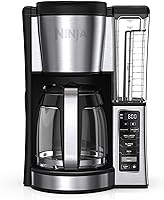
The Ninja Fresh Brew CE251 is the strongest all-around choice for changing batch sizes and easy water filling. The other picks suit shared breakfasts, restricted counter access, insulated serving or simpler daily care.
Ninja Fresh Brew CE251
- 24-hour delay brew
- Classic or Rich brew styles
- 1–4 cup small-batch setting
- 60 oz removable water reservoir
A good fit for homes that alternate between a short weekday pot and a larger weekend batch, with a reservoir you can fill at the sink.
Pros
- Dedicated small-batch setting
- Two brew styles
- Removable water reservoir
Cons
- Glass carafe needs a warming plate for holding
- Reservoir needs space for removal
Choose the Ninja if your coffee needs change through the week. Its 1–4 cup setting suits a short morning pot, while the 12-cup glass carafe gives you room for guests or a shared breakfast.
Classic and Rich brew styles let you adjust the brew without changing machines. Keep your coffee and water measurements steady when comparing them, so you can tell which setting suits your beans.
The removable 60 oz reservoir is useful if carrying water across the kitchen feels awkward. You can take the reservoir to the sink, though you still need enough clearance to remove and replace it.
Its adjustable warming plate can run for up to 4 hours, and a clean setting supports descaling. Treat that holding window as flexibility for a busy morning, rather than a reason to brew much more than you’ll drink.
Skip it if insulated serving is your priority. Compare our thermal carafe coffee maker options if you want to carry the pot to the table without relying on a heated base.
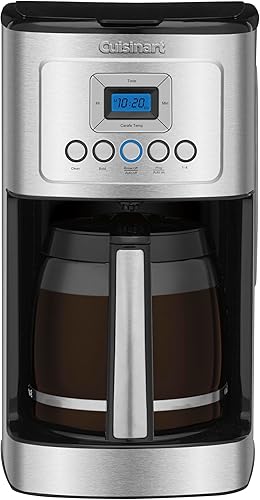
Cuisinart DCC-3200
- 24-hour programmability
- Low, Medium or High carafe temperature
- Regular or Bold brew strength
- 1–4 cup setting
The larger carafe suits a shared morning pot, while adjustable plate heat lets you choose how coffee is held between refills.
Pros
- Three warming-plate temperature options
- Adjustable auto-off period
- Optional ready alert tone
Cons
- 14-cup count means small coffee cups
- Holding coffee still requires a warming plate
Choose the Cuisinart for a household that shares a pot and wants control over how it stays warm. The Low, Medium and High plate settings let you adjust holding heat separately from the Regular or Bold brew choice.
Its 14-cup carafe uses about 5 oz per cup, giving a nominal total of about 70 oz. That is a more useful planning figure than assuming the machine fills 14 large mugs.
The auto-off period adjusts from 0 to 4 hours, and the ready tone is optional. Those controls suit a kitchen where one person pours right away and another arrives later.
A water window helps with filling, and the small-batch setting covers mornings when fewer people want coffee. Our Cuisinart DCC-3200 review takes a closer look at this model.
Skip it if you prefer to avoid continued plate heat. If you rarely share a pot, our coffee maker buying guide can help you decide whether a carafe brewer is the right size at all.
Hamilton Beach FrontFill Programmable
- Front-fill water reservoir
- Swing-open brew basket
- 24-hour programming
- Regular, Bold or 1–4 cup settings
Front access to both water and grounds suits a counter where overhead cabinets make daily filling awkward.
Pros
- Front-access reservoir and basket
- Small-batch option
- Cleaning-cycle reminder
Cons
- Needs room in front for basket access
- Keep-warm period ends after 2 hours
Choose the Hamilton Beach when overhead cabinets make adding water and grounds a daily nuisance. Its front-access reservoir and swing-open basket address both tasks, so you don’t have to reach over the machine to prepare a pot.
The body measures 12.9 in deep, 7.95 in wide and 13.9 in high. Allow extra working space in front for the basket and carafe instead of judging the fit by the body dimensions alone.
Regular, Bold and 1–4 cup options give it a role beyond solving a counter problem. The marked water window also helps you prepare the same amount each evening.
The display shows “CLEAN” when it’s time for the cleaning cycle. Its warming plate runs for 2 hours before auto shutoff, which suits a concentrated breakfast period.
Skip it if front access offers no benefit in your kitchen. On an open counter, decide whether you would get more use from the Ninja’s removable reservoir or the Cuisinart’s holding controls.
Black+Decker Thermal Programmable
- 24-hour auto brew
- Four-layer vacuum-sealed thermal carafe
- Strong brew selector
- Fresh-brew timer
An insulated carafe suits people who return for coffee over the morning and prefer holding it without continued plate heat.
Pros
- Thermal carafe needs no warming plate
- Elapsed-time display
- Strong setting slows brewing
Cons
- Heat retention depends on preparation and use
- Recommended preheating adds a step before brewing
Choose the Black+Decker Thermal Programmable if people pour coffee at different times and you want to avoid a warming plate. Black+Decker says its vacuum-sealed carafe keeps coffee hot for up to 2 hours.
Insulation preserves existing heat, so the preparation step matters. The brand recommends preheating the carafe with hot water before brewing, then emptying that water before the coffee flows in.
For a scheduled morning brew, you may prefer to prepare everything the night before. That convenience means the carafe won’t still be freshly preheated when brewing starts, so consider which part of the routine matters more.
The Strong button slows brewing, while the fresh-brew timer shows elapsed time up to 120 minutes. That display helps you judge the age of the pot rather than relying on memory.
Skip it if you expect coffee to stay equally hot all morning. Our thermal versus glass carafe comparison explains how insulation and plate heat suit different serving habits.
Black+Decker CM1160W Programmable
- 24-hour programmable controls
- Sneak-A-Cup pause
- Front-facing water window
- 2-hour auto shutoff
Choose this brewer for a repeatable morning pot, large control buttons and a water level you can check from the front.
Pros
- Large control buttons
- Washable basket filter
- Front-facing water window
Cons
- Fewer brew adjustments than the leading picks
- Keep-hot plate shuts off after 2 hours
Choose the Black+Decker CM1160W if you want a repeatable morning pot with straightforward controls. Large rubberized buttons handle programming, and the display shows the clock, brew time and scheduling options.
The front-facing water window helps you check the amount before bed. Its washable basket filter also suits a routine where you empty and rinse the filter after brewing.
Sneak-A-Cup temporarily stops the flow when you remove the carafe. Use it for a quick pour and return the pot promptly, following the timing limits in the instructions.
The keep-hot plate shuts off after 2 hours. Set the brewing time around when you’ll actually drink the coffee, rather than starting much earlier just because the timer allows it.
Skip it if you want several brew-strength or small-batch adjustments. This model makes more sense for someone who prepares a similar pot each day than for a household that often changes serving size and brew style.
Mr. Coffee 12-Cup Programmable
- Programmable brewing
- Strong Brew mode
- Auto Pause
- Top-rack dishwasher-safe carafe and brew basket
A useful choice for homes that want scheduled coffee and prefer putting the carafe and brew basket in the dishwasher afterward.
Pros
- Strong Brew option
- Mid-brew pouring
- Top-rack dishwasher-safe carafe and brew basket
Cons
- 12-cup count means small coffee cups
- Plate stops keeping coffee warm after 2 hours
Choose the Mr. Coffee if cleanup is the task most likely to disrupt your routine.
The carafe and brew basket are top-rack dishwasher-safe, so those parts can join the rest of the breakfast cleanup.
The Chai Cream finish also gives you a different look from the black and stainless finishes elsewhere here. Choose it for the care routine first, with appearance as a useful extra.
Strong Brew provides another flavor option, and Auto Pause allows a cup before the cycle ends. The glass carafe holds 60 fl oz, based on 12 small coffee cups.
Its warming plate shuts off after 2 hours. That suits coffee served during breakfast, while later drinkers should plan around a fresh batch or a different holding method.
Skip it if a small-batch mode or adjustable plate temperature is a priority. This model’s clearest reason to choose it is the combination of scheduled brewing, a stronger-brew option and dishwasher cleanup for the two main removable parts.
Which features matter when choosing the best programmable coffee maker?
Choose capacity, carafe style and filling access before comparing extra controls. A timer can start the pot for you, but it can’t correct an awkward fit or a batch that’s too large for your household.
Match a programmable coffee maker to your mug size
Measure what your mugs actually hold before choosing a carafe capacity. A coffee maker’s “cup” can be much smaller than the mug you take to your desk.
For example, a 60 oz batch works out to 5 servings of 12 oz before allowing for room for milk. That is a better way to plan a shared pot than counting the cups printed on the box.
Leave room for cream or milk when calculating your usual serving. Also consider whether a second cup is a daily habit or only a weekend extra.
Choose small-batch controls for short pots
A small-batch setting is useful when you regularly brew only part of a carafe. It adjusts the brewing process for a smaller amount, but you still need to add the matching water and coffee.
Don’t fill the reservoir for a full pot and expect the small-batch button to dispense only a few cups. Follow the brewer’s batch instructions and minimum fill level.
If most mornings mean 1 travel mug, compare that routine with the extra pot and basket cleanup. A full-size carafe brewer makes more sense when its larger capacity gets regular use.
Choose the carafe around your last cup
A glass carafe suits people who drink near the machine and want to see how much remains. A thermal carafe suits serving away from the base and holding coffee without adding heat.
Neither style stops coffee from changing as it sits. Brew closer to the amount you’ll drink, especially if your first cup and last refill are far apart.
Our thermal versus glass carafe guide covers the tradeoffs in more detail. Think about both heat retention and where the pot will sit during breakfast.
Measure working clearance, not just the footprint
Measure the space where you’ll fill, open and clean the machine, as well as the space it occupies. A brewer can fit under a cabinet yet still be awkward to prepare there.
Check the path for removing the reservoir, opening the basket and lifting out the carafe. Keep an accessible position that also follows the manufacturer’s clearance guidance for steam.
Front access is especially helpful when overhead access is restricted. On a clear counter, a removable reservoir may be the more useful convenience.
Separate brew strength from holding temperature
A stronger-brew setting changes how the machine prepares coffee, while a warming-plate setting changes how it holds the finished pot. Choose the control that addresses the part of your routine you want to change.
More intense flavor also doesn’t automatically mean more caffeine. The amount of coffee used and the serving size matter, so don’t treat a Bold or Strong button as a precise caffeine control.
If coffee tastes thin, first check your measurements. If it tastes harsh only after sitting, change how much you brew or how long you hold it before changing the recipe.
How to set up scheduled coffee for the morning
Run the first-use preparation and learn the timer before relying on an overnight brew. Then build a short evening routine that covers water, grounds, the carafe and the armed schedule.
Prepare the machine before its first scheduled brew
Wash the removable parts and run any rinse cycle required by the manual. Check that the filter basket, carafe lid and other removable pieces are seated correctly.
Make one brew while you’re awake so you can learn the controls and allow enough time for your usual batch. That also gives you a chance to adjust the coffee recipe before making it part of your morning schedule.
Set a start time, then confirm the timer is armed
Set the clock first, including AM or PM where shown, and then enter the desired brew time. Look for the model’s confirmation that scheduled brewing is active.
Treat the programmed time as the start of brewing unless the instructions say otherwise. Allow time for the cycle to finish before you plan to fill a travel mug.
After a power interruption or unplugging the machine for cleaning, check both the clock and schedule. Confirm the timer each evening instead of assuming the previous program remains active.
Finish with a short evening check
Before bed, check these items in order:
- Empty the old grounds and rinse away leftover coffee.
- Add fresh drinking water for the batch you want.
- Fit the correct filter and measure the grounds.
- Close the basket and place the empty carafe correctly.
- Confirm the brew choice, start time and active timer.
Overnight preparation trades some coffee freshness for convenience because ground coffee sits exposed longer. Prepare close to bedtime, and keep the rest of your coffee sealed away from heat and light.
If grinding immediately before brewing matters more to you, compare our best drip coffee makers with grinders. Check how any grinder brewer handles scheduling before choosing it for that reason.
How to get better coffee without changing the brewer
Use consistent measurements, a suitable grind and clean equipment before changing settings. Those habits make it easier to improve a weak, harsh or uneven cup.
Start with the coffee and water amounts recommended in your brewer’s instructions. Keep a note of the batch you liked, using weight for grounds if you have a kitchen scale.
Change one thing at a time. Adjust the coffee amount first, then compare strength settings with that same recipe so you know what caused the difference.
Use a grind suited to drip brewing. Very fine grounds can slow drainage, while very coarse grounds can leave the drink weak even when you add more coffee.
Avoid stacking filters unless the instructions specifically call for it. An extra paper filter inside a reusable filter can restrict flow and create an overflow risk.
A pause feature gives you time for a brief pour, not an open-ended break from brewing. The basket can keep receiving water while the carafe is out, so return it within the manual’s limit.
Let the full cycle finish when you want the most consistent shared pot. Coffee arriving early in the cycle can differ in strength from coffee arriving later, which affects an early cup.
Finally, avoid topping up old coffee with a fresh batch. Empty the carafe first so yesterday’s residue or a stale remainder doesn’t carry into the next pot.
What care does a programmable coffee maker need?
Remove coffee residue after use and descale mineral buildup on the maker’s schedule. A cleaning button or reminder supports that work, but it doesn’t wash the carafe and basket.
Empty used grounds after brewing rather than leaving them until the next evening. Wash removable parts as directed, rinse thoroughly and let them dry before reassembly.
Use the dishwasher only for parts the manufacturer approves for it. Dishwasher-safe care for one model doesn’t apply to every glass carafe, lid or filter basket in this roundup.
Descaling addresses minerals inside the water path, while washing removes oils and residue from coffee-contact surfaces. Our drip coffee maker cleaning guide explains both jobs.
Follow the brewer’s instructions for descaling solution, dilution and rinse cycles. Don’t mix cleaning products or assume the same vinegar recipe suits every machine.
A slower cycle, unusual dripping or overflow also deserves a check of the filter, grounds and basket seating. Adding less coffee may hide a blocked-flow problem without dealing with its cause.
For a thermal carafe, pay attention to the lid and pouring path as well as the interior. Keep the electrical base out of water and unplug it before wiping, following the care instructions.
Which programmable coffee maker should you pick?
The best programmable coffee maker is the one that removes your main morning chore. Use batch changes, filling difficulty, serving habits or cleanup to make the final choice.
- Choose the Ninja Fresh Brew CE251 when your batch size varies and carrying the reservoir to the sink would help.
- Choose the Cuisinart DCC-3200 when several people share a pot and you want control over holding heat.
- Choose the Hamilton Beach FrontFill Programmable when filling beneath cabinets is the daily problem.
- Choose the Black+Decker Thermal Programmable when you want insulated serving and accept that heat gradually fades.
- Choose the Black+Decker CM1160W Programmable when you repeat the same routine and want simple scheduling controls.
- Choose the Mr. Coffee 12-Cup Programmable when dishwasher cleanup will make regular care easier.
Before ordering, measure your usual batch in ounces and check the space needed to prepare the brewer. If those checks point toward a different format, use our coffee maker buying guide to compare drip, pod and combo machines.
Our top 3 picks at a glance
-
1
-
2
-
3
Best for under-cabinet counters
Hamilton Beach FrontFill Programmable
7.8/10 our score
See it on Amazon
Frequently asked questions
What should you look for in a programmable coffee maker?
Start with the amount you drink and when you drink it, then choose the carafe and filling layout. A timer handles the start, but small-batch controls, access under cabinets and the way coffee stays warm determine how well the brewer fits your daily routine.
Can you program a coffee maker for a small batch?
Yes. The Ninja Fresh Brew CE251, Cuisinart DCC-3200 and Hamilton Beach FrontFill Programmable pair scheduled brewing with a 1–4 cup setting.
Add only the water and grounds needed for that batch, following the model's instructions.
The setting doesn't measure a smaller serving from a full reservoir for you.
Is a thermal carafe better than a glass carafe?
A thermal carafe is better for holding coffee without a warming plate, while glass lets you see how much remains. Insulation slows heat loss rather than adding heat.
Choose around the gap between your first and last cups, and remember that a small batch has less heat to retain.
How often should you clean a programmable drip coffee maker?
Empty used grounds and clean the carafe and brew basket after use, following the care instructions for each part. Descale on the maker's schedule, with water hardness and any cleaning reminder guiding timing.
Our drip coffee maker cleaning guide explains the difference between removing coffee residue and clearing mineral buildup.