Cuisinart DCC-3200 14-Cup Coffee Maker Review: Worth It? (October 2026)
The Cuisinart DCC-3200 suits households sharing a morning pot, with programmable brewing and adjustable warming for a glass carafe. Choose an alternative if sink-side filling, individual drinks or thermal serving matters more.
On this page (11 sections)
- Cuisinart DCC-3200 14-Cup Coffee Maker Review
- What does the Cuisinart DCC-3200 offer?
- How much coffee does the 14-cup carafe really make?
- Will the DCC-3200 fit your counter and morning routine?
- How should you set up scheduled brewing?
- How do you get better coffee from the strength and warming controls?
- How does the DCC-3200 compare with other drip coffee makers?
- Is a glass carafe right for the way you drink coffee?
- What care does the DCC-3200 need?
- Which common mistakes should you avoid?
- Should you buy the Cuisinart DCC-3200?
Cuisinart DCC-3200 14-Cup Coffee Maker Review
The Cuisinart DCC-3200 is a good fit for households sharing a morning pot who want scheduled brewing and control over how warm the remaining coffee stays. Its main appeal is a familiar glass-carafe routine with useful adjustments.
Buy it for several servings of drip coffee, especially when people refill their mugs through breakfast. Look elsewhere if your main need is one fresh serving at a time, iced drinks or a carafe you can carry away from the brewer.
What does the Cuisinart DCC-3200 offer?
The DCC-3200 combines large-batch brewing with separate strength and warming controls. It uses ground coffee, so you can choose your beans without building your routine around pods.
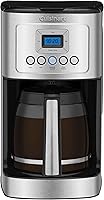
Cuisinart DCC-3200
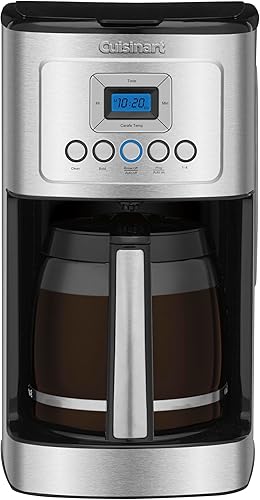
- 14-cup glass carafe
- Low, Medium or High warming plate
- Regular or Bold brew strength
- 24-hour programmability
A large-batch brewer for households that share morning coffee and want separate controls for brew strength and carafe warming.
Pros
- Three warming plate temperature settings
- Regular and Bold brew strength
- Small-batch setting and scheduled brewing
- Optional ready alert tone
Cons
- Glass serving depends on a warming plate
- Cup markings represent small servings rather than full mugs
- Carafe-focused design is less suited to individual drink orders
Its Regular and Bold settings let you choose the brew strength, while Low, Medium and High adjust the warming plate. The 24-hour timer handles scheduled starts, and the optional ready tone lets you choose whether the machine announces the finished pot.
The useful distinction is between making coffee and holding it afterward. A strength setting changes your brew choice; a warmer plate doesn't turn weak coffee into a stronger cup.
Who earns the most value from the Cuisinart DCC-3200?
Shared-pot households get the clearest benefit from this design. One person can prepare the brewer at night, and several people can pour from the same batch the next morning.
DecidedlyCozy's 8.6 score reflects that fit: ample batch capacity and useful daily controls, with less flexibility for individual drink orders. Skip it if most of that capacity would go unused.
How much coffee does the 14-cup carafe really make?
The carafe holds about 70 oz by Cuisinart's cup measure, because each labeled cup is about 5 oz. Think in ounces and mug sizes before deciding whether that meets your household's needs.
That nominal amount works out to roughly 5 full 12 oz mugs with some coffee left over, rather than 14 large servings. Brewing technique can affect the final yield, so leave some margin when planning coffee for guests.
For a useful buying check, measure your normal pour once. Multiply it by the number of servings your household drinks during the same sitting, including refills.
The 1-4 cup setting supports smaller batches, but those cup markings still refer to small servings. Use the water level and coffee dose for the amount you actually want, rather than filling the machine and expecting the setting to limit the batch.
If one mug is your usual daily order, compare the options in our single-serve coffee maker guide. For households that alternate between small and shared pots, our drip coffee maker guide covers more carafe-based choices.
Will the DCC-3200 fit your counter and morning routine?
The DCC-3200 needs space above the brewer as well as room for its base. Its dimensions are 7.75 in deep, 9 in wide and 14 in high.
Measure the counter with your upper cabinets in mind. The closed height alone doesn't tell you whether you'll have comfortable access for adding water and grounds.
Allow a clear path for removing the carafe without bumping nearby appliances. Place the brewer on a stable surface where the cord and hot pot won't sit near the counter edge.
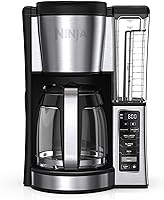
Also consider how you'll fill it each morning. The water window helps you follow the fill level, but if carrying a reservoir to the sink is your priority, the Ninja CE251 below offers that feature.
How should you set up scheduled brewing?
For reliable scheduled coffee, prepare the whole brew path before activating the timer. Follow the manual's first-use rinse instructions before making your first pot.
Set the clock, add fresh water, fit the filter correctly and measure the grounds for your chosen batch. Seat the carafe with its lid in place, then confirm the scheduled time and that programmed brewing is active.
Check AM and PM carefully when setting an early start. An accurate clock and a saved brew time won't help if the automatic start hasn't been enabled.
Set the auto-off period separately; the DCC-3200 allows a range from 0 to 4 hours. Choose a holding period that matches breakfast rather than leaving the longest option in place by default.
Preparing grounds overnight trades some freshness for convenience because ground coffee loses aroma as it sits. If flavor matters more than having coffee ready when you wake, add freshly ground coffee just before brewing.
For more machines built around scheduled starts, see our best programmable coffee makers.
How do you get better coffee from the strength and warming controls?
Start with a measured coffee dose and a consistent grind, then compare the strength settings. Change one thing at a time so you can tell which adjustment helped.
Use coffee ground for drip brewing as your starting point. Very fine grounds can slow drainage, while very coarse grounds can produce a thin cup.
If the coffee tastes weak, check the amount of grounds relative to the water before increasing the warming temperature. For bitter coffee, consider the grind, dose and time spent on the plate rather than assuming more heat will help.
Choose the lowest warming level that keeps coffee comfortable for your routine. Coffee changes as it sits under continued heat, so brewing less is often more useful than keeping an oversized pot warm for hours.
Brew Pause lets you take an early cup, but return the carafe promptly and follow the manual's pause limit. The first pour can differ in strength from the finished pot because brewing is still underway.
How does the DCC-3200 compare with other drip coffee makers?
Choose an alternative when filling, drink variety or insulated serving matters more than a larger shared pot. Each model below solves a different daily problem.
| Coffee maker | Capacity and carafe | Main reason to choose it |
|---|---|---|
| Cuisinart DCC-3200 | 14 cups, glass | Shared morning pots with adjustable warming |
| Ninja Fresh Brew CE251 | 12 cups, glass | Carrying the reservoir to the sink |
| Ninja CM401 Coffee Maker | 10 cups, glass | Individual servings, iced coffee and milk drinks |
| Cuisinart PerfecTemp Thermal 12-Cup | 12 cups, thermal | Keeping coffee in an insulated carafe |
Capacity is only one part of this choice. Our guide to thermal versus glass carafe coffee makers explains why serving habits can matter more than the number printed on the pot.
When does the Ninja Fresh Brew CE251 make more sense?
Choose the CE251 if refilling at the sink would simplify your morning. Its removable 60 oz reservoir saves you from pouring water into the brewer from another container.
Classic and Rich brew styles, a small-batch function and scheduled brewing cover a similar everyday role to the Cuisinart. A permanent filter and integrated scoop are included.
This is the practical alternative for someone who wants ordinary carafe coffee and places easy refilling ahead of maximum batch size. Skip it if thermal serving or a range of individual drink sizes is your main goal.
Its adjustable warming plate still means you're choosing a glass-pot routine. Don't switch from the DCC-3200 expecting a different way of storing the finished coffee.
Is the Ninja CM401 better for varied drinks?
Choose the CM401 if people in your home want different drinks and serving sizes. Its Classic, Rich, Over Ice and Specialty styles go beyond a standard shared pot.
The six sizes range from Cup to Full Carafe, and Specialty makes a coffee concentrate for milk drinks. The fold-away frother handles hot or cold milk and milk alternatives.
That concentrate is useful for coffeehouse-style drinks, but it isn't pressure-brewed espresso. Choose this machine for flexible grounds-based drinks rather than as a substitute for an espresso machine.
Skip the CM401 if everyone drinks the same black coffee from a large morning batch. Its extra drink options bring more preparation and cleanup, while its 50 oz carafe is smaller than the Cuisinart's.
Should you choose the Cuisinart PerfecTemp Thermal 12-Cup instead?
Choose the PerfecTemp Thermal if coffee breaks happen at different times and you prefer insulated storage. Its thermal carafe makes it the closest alternative here for changing how you hold and serve coffee.
You retain scheduled brewing, strength choices and a small-batch setting. The main trade is accepting a smaller batch in exchange for the thermal carafe.
An insulated carafe also suits serving away from the brewer. Keep its lid closed between pours to reduce heat loss, and follow the manual's directions for care.
Skip this model if your household finishes coffee quickly and you prefer seeing the remaining amount through glass. There is little reason to give up the DCC-3200's extra capacity if insulated serving won't change your routine.
Is a glass carafe right for the way you drink coffee?
A glass carafe makes sense if you finish a batch within a fairly short window and want to see how much remains. It is less suited to a pot that sits unfinished through much of the day.
Treat the warming plate as a holding tool, rather than a way to preserve freshly brewed flavor indefinitely. If you often discard the last few servings, reduce the next batch instead of extending the warming period.
Handle the glass carefully and avoid sudden temperature changes. Don't set a hot carafe on a cold or wet surface, or add cold water while the glass is still hot.
For a closer look at serving and care differences, read our thermal versus glass carafe comparison.
What care does the DCC-3200 need?
The DCC-3200 needs regular washing for coffee residue and periodic descaling for mineral buildup. These are separate jobs, and a rinse alone doesn't replace either one.
After brewing, discard the grounds and let the removable parts cool before cleaning them as the manual directs. Wash the carafe and filter area regularly so old coffee oils don't carry into the next batch.
Keep the carafe lid and the parts around the brew basket free of residue. Make sure everything is seated correctly before starting another brew.
The decalcification indicator signals when mineral care is due. Follow the model's cleaning instructions for the correct solution, amount and rinse cycles rather than guessing a mixture.
Our guide to cleaning a drip coffee maker explains the difference between daily cleanup and scale removal. For help with the indicator, see what to do about a Cuisinart coffee maker clean light.
Which common mistakes should you avoid?
Avoid overfilling, poor filter placement and unnecessary long holding times. These habits can create more trouble than choosing the wrong strength setting.
- Counting cup marks as mugs: Plan the batch around your actual pour size.
- Adding extra water after measuring grounds: Keep the coffee and water amounts matched.
- Overfilling the basket: More grounds aren't always the answer to weak coffee, and excess grounds can interfere with drainage.
- Leaving the carafe out during Brew Pause: Return it promptly so brewing can continue into the pot.
- Ignoring stale coffee residue: Wash the parts that contact brewed coffee, even when the water path looks clean.
- Using the timer without checking the clock: Confirm the time and programmed start before relying on an early brew.
If coffee starts draining unusually slowly, stop and check the filter placement, grind and cleaning needs before repeating the same batch. Follow the manual when inspecting or cleaning the machine.
Should you buy the Cuisinart DCC-3200?
Buy the Cuisinart DCC-3200 if several people share drip coffee during the same morning window. Its larger batch capacity and separate warming control fit that routine well.
Choose the CE251 when sink-side filling is the deciding convenience. Pick the CM401 when individual servings and varied drinks matter, or the PerfecTemp Thermal when coffee needs to stay in an insulated carafe between breaks.
Before ordering, settle two things: how many ounces you actually drink together and where the finished coffee will sit. For a broader comparison of brewing styles, use our complete home coffee maker guide.
Frequently asked questions
How many ounces is a cup on the Cuisinart DCC-3200?
A Cuisinart cup is about 5 oz, so 14 cups represents about 70 oz rather than 14 full mugs. Divide that amount by your usual serving size when planning a batch, and allow for some variation in the amount of brewed coffee you get.
Can you set the Cuisinart DCC-3200 to brew ahead?
Yes, the DCC-3200 lets you schedule brewing up to 24 hours ahead. Add the water and grounds, seat the carafe, confirm the clock and activate the programmed brew before leaving it overnight.
Set auto-off separately so the warming period fits when you expect to finish the coffee.
Does the Cuisinart DCC-3200 keep coffee warm?
Yes, the DCC-3200 has a warming plate with Low, Medium and High temperature settings for its glass carafe. That control adjusts how the remaining coffee is held after brewing.
Choose the lowest setting that suits your drinking routine, and make smaller batches if coffee regularly sits unfinished.
What is the difference between regular and bold on the DCC-3200?
Regular and Bold are separate brew strength choices, while the warming plate control sets the holding temperature. Compare the strength options using the same grounds and water amounts so you can judge the difference clearly.
A bolder setting doesn't replace using enough coffee for the batch you're making.