How to Clean a Drip Coffee Maker
Here's how to clean a drip coffee maker: wash removable parts, wipe the cooled exterior, and descale with an approved cleaner. Complete the required fresh-water rinse cycles before brewing coffee.
On this page (9 sections)
- How do you clean a drip coffee maker step by step?
- Which parts need washing after brewing?
- How do you descale a drip coffee maker?
- How many rinse cycles should you run?
- What cleaning mistakes should you avoid?
- How often should you clean a drip coffee maker?
- Which cleaner should you choose for a drip coffee maker?
- What should you do if coffee still tastes off?
- How should you choose your next cleaning step?
Here's how to clean a drip coffee maker: wash the removable parts, wipe the cooled exterior, and descale the water path with an approved cleaner. Finish all required fresh-water rinse cycles before brewing coffee.
Washing removes coffee oils and grounds from the basket and carafe. Descaling tackles mineral deposits inside the brewer, so a clean-looking pot doesn't mean the whole machine is clean.
How do you clean a drip coffee maker step by step?
Start with a cool, unplugged machine, wash its removable parts, then reassemble it for descaling. Have the manual, a soft cloth, mild dish soap, and a compatible descaler ready before you begin.
- Empty the brewer. Discard used grounds and the paper filter, and pour out leftover coffee.
- Remove washable parts. Take out the carafe, brew basket, and reusable filter if your machine has one.
- Wash and rinse. Use the manufacturer's approved method, paying attention to the carafe lid and basket corners.
- Wipe the machine. Clean the cooled warming plate and exterior with a damp cloth, then dry them.
- Prepare for descaling. Refit the parts needed for the cycle and follow any instructions for removing a reservoir water filter.
- Descale and rinse. Use the approved dose and cycle, then complete every fresh-water rinse.
Never immerse the base or pour water into vents and controls. Plug the machine back in only when it's reassembled and the outside is dry.
What do you need to clean a drip coffee maker safely?
Use soft cleaning tools and a method approved for your model. A nonabrasive sponge or soft brush helps reach removable parts without scratching them.
Don't assume every loose part is dishwasher-safe. Keep the manual's cleaning directions nearby, especially if the brewer has a water filter, a clean button, or a thermal carafe.
Which parts need washing after brewing?
Wash the carafe, lid, brew basket, and reusable filter after use, following their care instructions. These surfaces collect coffee oils that descaling alone may leave behind.
Let glass cool before washing it, since a sudden temperature change can crack it. Remove detachable lid pieces only where the manual allows, and rinse away all dish soap.
Check the basket's outlet and the mesh of a reusable filter for trapped grounds. Use a soft brush on removable parts rather than pushing sharp tools into valves or openings.
Wash a removable water reservoir as directed and rinse it well. Don't pour soapy water into a fixed reservoir or run dish soap through the internal brewing system.
Carafe care also depends on its construction. Our thermal versus glass carafe guide explains the differences that matter for daily use.
How do you descale a drip coffee maker?
Use the cleaner, dose, water amount, and cycle your machine permits. Don't substitute a stronger mixture or a longer soak for the prescribed process.
Start with an empty basket and carafe, and check whether the reservoir's water filter must come out. Place the carafe correctly so it can catch the cleaning solution without blocking the brew outlet.
Run the dedicated clean cycle if your model requires one. Pause or soak only when the instructions call for it, and never brew coffee while cleaner is in the reservoir.
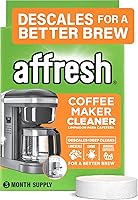
Affresh suits buyers who want a small pack and want to avoid vinegar odor. It contains 3 tablets, and Affresh recommends monthly use or use as needed.
Skip this pack if you want a larger supply for several compatible brewers. Affresh's U.S.
EPA Safer Choice certification may also help buyers choosing among cleaning formulas, but machine compatibility still comes first.
If your machine has a maintenance alert, see what to do when a Cuisinart coffee maker's clean light comes on. For a pod brewer's procedure, read how to descale a Keurig coffee maker.
Can you use descaler tablets in a drip coffee maker?
Use tablets only when your brewer allows that type of descaler. A tablet's broad compatibility statement doesn't replace model-specific instructions.
ACTIVE suits households maintaining several compatible machine types. Its tablets cover regular multi-cup and pod-style brewers, and ACTIVE says its formula removes mineral deposits, grime, and coffee oils.
Skip the bulk pack if you only need a few cleaning treatments or your machine requires another cleaner. Follow ACTIVE's package directions for dosage and rinsing rather than borrowing another brand's method.
Store tablets in their original packaging, away from food and out of reach of children and pets. Don't add extra tablets to speed up a slow cleaning cycle.
How many rinse cycles should you run?
Complete the fresh-water rinse procedure required by both the cleaner and your machine. Empty the carafe after each cycle so the next rinse doesn't mix with used cleaning water.
Refill the reservoir with fresh water each time and leave coffee grounds out. Stay within the fill line, and follow any cooling interval specified between cycles.
If the directions conflict, get guidance from the coffee maker's manufacturer before proceeding. Don't stop early just because the rinse water looks clear, and don't use coffee to cover a remaining cleaner odor.
What cleaning mistakes should you avoid?
Avoid unapproved chemicals, mixed cleaners, and shortcuts around rinsing. More cleaner doesn't make an unsuitable method safe.
- Putting dish soap in the reservoir: save it for removable parts approved for washing.
- Mixing vinegar and descaler: use one approved cleaning method at a time.
- Scrubbing with abrasive pads: these can scratch the carafe, warming plate, or finish.
- Forgetting the lid and filter: residue can remain there after the pot looks clean.
- Descaling a leaking machine: stop and identify the leak before running more water through it.
For that last problem, our guide to why a Cuisinart coffee maker leaks can help owners of that brand narrow down the cause.
How often should you clean a drip coffee maker?
Clean coffee-contact parts after use and descale on your model's maintenance schedule. Water hardness and frequent brewing can make mineral buildup develop sooner.
A simple routine is easier to keep: empty grounds after brewing, wash removable parts once cool, and record the date you descale. Let washed parts dry before closing everything up.
Treat slower flow, unusual noise, or a maintenance light as reasons to check the manual. Those signs can have several causes, so don't assume another dose of descaler is always the answer.
For a clearer picture of where scale collects, see how a drip coffee maker works.
Which cleaner should you choose for a drip coffee maker?
Choose by machine approval first, then pack size and directions. All 3 options here support drip-machine care, but none should override a brewer's specific requirements.
Clean Elements suits buyers who want a bulk pack with a stated dose and rinse method. Its 24-count pack comes with directions to add 1 tablet to the reservoir, fill with clean water, run a brew cycle, then complete 1–2 fresh-water cycles.
Clean Elements recommends use every 30 days or after about 30 brew cycles. Check your brewer's water amount and cleaning sequence before starting.
Skip it if your main concern is a stained plastic tank. Clean Elements says the tablets aren't designed to bleach plastic, so a remaining stain doesn't by itself show that internal descaling failed.
Choose Affresh for a smaller supply and an unscented option. Choose Clean Elements for its stated routine, or ACTIVE for a bulk supply serving several compatible brewer types; these facts don't establish that one cleans faster than another.
For a separate pod system, follow our guide to how to clean a Keurig coffee maker. Our complete guide to home coffee makers explains the main machine types if you're comparing maintenance needs before buying.
What should you do if coffee still tastes off?
Check for leftover residue and confirm that rinsing is complete before descaling again. Inspect the carafe lid, reusable filter, basket outlet, and any removable parts you missed.
Consider the coffee and water too. Stale grounds or water with an unpleasant taste can affect the next pot even after the brewer is clean.
If the machine still brews poorly, leaks, or shows a warning, use its troubleshooting instructions. A persistent clean light may need a specific reset sequence rather than another treatment.
How should you choose your next cleaning step?
Wash visible coffee residue, descale on schedule, and troubleshoot persistent faults separately. That's the practical decision rule for how to clean a drip coffee maker without repeating unnecessary cycles.
Buy a cleaner only after checking compatibility, and choose a pack size you'll use. If a maintenance light remains on after the full procedure, the Cuisinart clean-light guide gives owners of that brand a useful next step.
Frequently asked questions
How often should I clean a drip coffee maker?
Empty grounds and wash the carafe and brew basket after use, following the manual's care directions. Descale on your machine's schedule, taking water hardness and brewing frequency into account.
A clean light is a maintenance reminder, but visible residue on removable parts needs attention between descaling cycles.
Can I use vinegar to clean a drip coffee maker?
Use vinegar only if your coffee maker's manual allows it, and follow its dilution and cycle instructions. Some machines require a specific descaler instead.
Never combine vinegar with another cleaner, and finish every required fresh-water rinse cycle before adding grounds for your next pot of coffee.
Why does my coffee maker still taste strange after cleaning?
Leftover coffee oils, cleaner residue, stale grounds, or the water itself can cause an odd taste. Check the basket, carafe lid, reusable filter, and completed rinse steps first.
If the taste continues after the recommended cleaning procedure, follow your model's troubleshooting advice rather than repeatedly adding more cleaner.
How many rinse cycles should I run after descaling?
Run the number of fresh-water rinse cycles required by your coffee maker and cleaner. Clean Elements specifies 1–2 cycles, but your machine may require a dedicated sequence.
Empty the carafe between cycles, refill with fresh water, and complete the full procedure before brewing coffee again.