How Does a Drip Coffee Maker Work?
A drip coffee maker works by heating water and passing it over ground coffee, then letting the coffee drain through a filter into a carafe. Grind size, the coffee-to-water ratio, and water distribution affect the result.
On this page (8 sections)
- How does a drip coffee maker work step by step?
- What do the heater, showerhead, and filter each do?
- How should you set up a drip coffee maker?
- Why does drip coffee taste weak, bitter, or muddy?
- Which drip coffee maker suits your routine?
- How do you keep the water path and basket clean?
- Should you choose drip, pods, or a thermal carafe?
- How should knowing how a drip coffee maker works guide your choice?
A drip coffee maker works by heating water, spreading it over ground coffee, and letting the brewed coffee drain through a filter into a carafe. The heater and water path handle delivery; your grind and coffee-to-water ratio shape the cup.
Choose one around the amount you drink and how you'll fill it each morning. A timer, small-batch setting, or front-access basket is useful only if it solves part of your daily routine.
How does a drip coffee maker work step by step?
A drip coffee maker moves heated water onto the grounds, then uses gravity to collect the coffee below. The filter holds back most grounds while dissolved coffee compounds pass through.
- Fill the reservoir with fresh water to the amount you want to brew.
- Seat the correct filter in the basket and add ground coffee.
- Place the carafe correctly and start the cycle.
- The heating system warms water and sends it toward the showerhead.
- Water spreads over the grounds and extracts flavor as it passes through.
- Coffee drains into the carafe until the basket finishes dripping.
The reservoir generally determines the batch size, so don't assume the machine will stop after 2 cups if you've filled it for 10. Strength and small-batch buttons aren't substitutes for measuring water.
Once brewing ends, a warming plate may stay on. That stage keeps the drink warm; it doesn't extract more coffee from the grounds.
What do the heater, showerhead, and filter each do?
The heater warms the water, the showerhead distributes it, and the filter separates the brewed drink from the grounds. Problems at each stage can change the result in different ways.
In many basic machines, steam bubbles help lift heated water through an internal tube. Other designs manage delivery differently, so don't assume every drip brewer uses the same internal parts.
The showerhead should wet the coffee bed across its surface. Spread grounds level before closing the basket rather than leaving them piled on one side.
Paper and reusable filters also produce different cups. Paper generally holds back more fine particles and oils, while a mesh filter can allow more sediment through.
Use the filter type and size your machine requires. Stacking paper filters or adding paper inside a reusable filter without instructions can slow drainage and cause overflow.
How should you set up a drip coffee maker?
Start with the manual's rinse instructions, the correct filter, and a measured batch. Before the first coffee brew, wash removable parts as directed and run any required water-only cycle.
Set the brewer on a level surface with room to fill it and release steam. Measure cabinet clearance with the lid open, not just the machine's closed height.
A useful starting ratio is 60 grams of coffee per liter of water. For a 500-milliliter batch, that means 30 grams of coffee; adjust from there to suit your taste.
Begin with a medium grind intended for drip brewing. A scale makes changes easier to repeat, but a consistent scoop and the same water marks can also establish a routine.
Coffee-maker “cups” aren't necessarily mug-sized. Cuisinart and BLACK+DECKER define a cup here as about 5 ounces, so count your usual mugs before choosing capacity.
Why does drip coffee taste weak, bitter, or muddy?
Weak coffee often needs a better coffee-to-water ratio, while bitterness or muddy texture may call for a grind or filter change. Adjust one variable per batch so you know what helped.
- Weak or thin: Add a little more coffee for the same water amount; if the grind is coarse, try slightly finer.
- Harsh or bitter: Try a slightly coarser grind and avoid leaving finished coffee on heat longer than needed.
- Muddy: Check that the filter fits and is seated correctly; very fine grounds can pass through mesh.
- Overflowing basket: Stop the cycle safely, let it cool, and check for excess grounds, a folded filter, or a blocked outlet.
Don't keep adding coffee beyond the basket's limit to chase strength. A stronger setting may change brew time or flow, but it can't correct an overfilled basket.
Pouring early also affects consistency because the first liquid through the grounds differs from the last. Let the cycle finish and gently swirl the carafe before serving when you want evenly mixed cups.
Which drip coffee maker suits your routine?
Choose by batch size, filling access, and the controls you'll actually use. These 4 machines suit different routines, even though each uses ground coffee and a glass carafe.
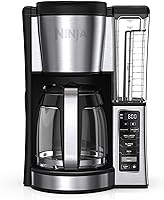
Ninja Fresh Brew CE251: for changing batch sizes
The Ninja suits households that switch between a few cups and a larger pot. Its 12-cup capacity, dedicated 1–4 cup function, and Classic or Rich settings give those routines separate controls.
The removable 60-ounce reservoir is useful if carrying water to the counter is awkward. Its permanent filter means you can brew without stocking paper filters, provided you rinse and clean it regularly.
Choose it for flexible batch sizes and sink filling. Skip it if you want insulated storage instead of a glass carafe on a warming plate.
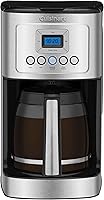
Cuisinart DCC-3200: for larger shared pots
The Cuisinart suits households that regularly serve several people. Its 14-cup carafe provides more batch capacity than the other models here.
Low, Medium, and High warming-plate settings let you choose how the finished pot is held. This is separate from brew strength: changing holding heat doesn't change extraction.
Choose it when a larger pot and adjustable holding temperature matter. Skip it if you mainly fill one mug and would rarely use the carafe's capacity.
How does the Black+Decker programmable drip coffee maker work?
The Black+Decker suits a fixed morning schedule: its 24-hour timer starts the normal brew cycle at your chosen time. Set the clock, add water and coffee, and confirm auto brew is active.
It requires a standard paper coffee filter and has a 2-hour auto shutoff. Sneak-A-Cup temporarily stops coffee flow when you remove the carafe, but return it promptly within the manual's limit.
Choose it for scheduled carafe brewing and paper-filter cleanup. Skip it if dedicated strength or small-batch controls are priorities; the Ninja and Cuisinart provide those options.
Hamilton Beach FrontFill: for filling beneath cabinets
The Hamilton Beach suits counters where overhead access makes refilling awkward. Its front-access reservoir and swing-open basket reduce the need to pull the brewer forward for each batch.
It uses a #4 paper filter and offers regular, bold, and 1–4 cup options. A CLEAN reminder prompts you to run the cleaning cycle.
Choose it when access is the main obstacle, but leave space for the basket to swing open. Skip it if you prefer lifting the reservoir out and carrying it to the sink.
Compare more models in our best drip coffee makers guide, or focus on timer controls in best programmable coffee makers.
How do you keep the water path and basket clean?
Wash away coffee residue and remove mineral buildup as separate jobs. A cleaning reminder doesn't wash the basket or carafe for you.
Discard used grounds after brewing and let hot parts cool before handling. Clean the basket, filter, lid, and carafe according to the manual, including areas where coffee oils collect.
Descale at the interval your manufacturer recommends, using its approved method. Hard water can require more frequent care, and slower flow can be a reason to check for scale.
Finish with the required fresh-water rinse cycles. Our guide to how to clean a drip coffee maker explains the routine in more detail.
Should you choose drip, pods, or a thermal carafe?
Choose drip for shared pots and control over ground coffee, pods for separate servings, and a thermal carafe when you want heat retention without a warming plate. All 4 machines above use glass carafes.
Coffee can develop a stale or harsh taste while sitting on a hot plate. Brew closer to what you'll drink, or compare thermal and glass carafe coffee makers if you sip over several hours.
Pod machines reduce daily measuring, but they require compatible pods or an appropriate reusable filter. Read Keurig vs drip coffee maker before switching, and check whether you can use K-Cups in a regular coffee maker before mixing formats.
For the wider range of options, our home coffee maker guide covers drip, pod, and combo machines.
How should knowing how a drip coffee maker works guide your choice?
Understanding how a drip coffee maker works points you toward useful controls and easy daily care. Pick the Ninja for changing batch sizes, Cuisinart for larger shared pots, Black+Decker for a fixed schedule, or Hamilton Beach for front filling.
Measure water and grounds before reaching for extra settings. Keep the filter seated, let the basket finish draining, and follow our drip coffee maker cleaning guide to maintain the water path.
Frequently asked questions
How does a drip coffee maker heat water?
A drip coffee maker uses an electric heating element to warm water from its reservoir. In many basic designs, steam bubbles help push heated water through a tube toward the showerhead.
Water then falls onto the grounds, while gravity carries brewed coffee through the filter into the carafe.
Does a drip coffee maker boil water?
A drip coffee maker may form steam bubbles in its heating tube, but that doesn't mean the whole reservoir boils or boiling water reaches the grounds. Temperature changes as water travels through the machine.
Keep the basket closed during brewing, and follow the manual before opening or cleaning hot parts.
Why does drip coffee taste weak?
Weak drip coffee often comes from too little coffee for the water, a grind that's too coarse, or uneven wetting of the grounds. Start with measured amounts and a medium grind, then change one thing per batch.
If water flow has slowed, check whether the machine needs descaling.
What does the showerhead do in a drip coffee maker?
The showerhead spreads heated water over the coffee grounds so extraction can happen across the bed. Uneven coverage can leave some grounds less wet while water passes repeatedly through another area.
Keep its outlets clean as the manual directs, and spread the grounds level before starting a brew.